
[C++] STL stack
C++ STL의 stack은 나중에 들어온 원소가 가장 먼저 나가는 LIFO(Last In, First Out) 구조를 구현한 컨테이너 어댑터(container adapter) 이다.
stack 자체는 컨테이너가 아니며, vector, list, deque와 같은 실제 컨테이너 위에서 stack처럼 동작하도록 만든 인터페이스라고 생각하면 된다.
stack[2]와 같은 임의 접근은 불가능하며, 오직 맨 위(top) 원소를 통해서만 접근이 가능하다.
주요 멤버 함수
| 함수명 | 설명 |
|---|---|
| push(x) | 원소 x를 stack의 맨 위에 추가 |
| pop() | 맨 위 원소 제거 (반환값 X) |
| top() | 맨 위 원소 반환 |
| empty() | 스택이 비어 있는지 확인 |
| size() | 원소 개수 반환 |
pop()과 top()을 사용할 때 스택이 비어 있는지 잘 모르겠다면, 항상 empty()로 비어 있지 않은지 확인해야 한다. 만약 비어 있는 상태에서 pop()과 top()을 사용한다면 런타임 에러가 발생한다.
사용 예시
#include <iostream>
#include <stack>
using namespace std;

int main() {
    stack<int> s;

    s.push(10);
    s.push(20);
    s.push(30);

    cout << "현재 top: " << s.top() << "\n";

    s.pop();
    cout << "pop 후 top: " << s.top() << "\n";

    if (!s.empty()) {
        cout << "stack 크기: " << s.size() << "\n";
    }

    while (!s.empty()) {
        cout << s.top() << " ";
        s.pop();
    }

    return 0;
}
🔽 출력 :
현재 top: 30
pop 후 top: 20
stack 크기: 2
20 10
실전
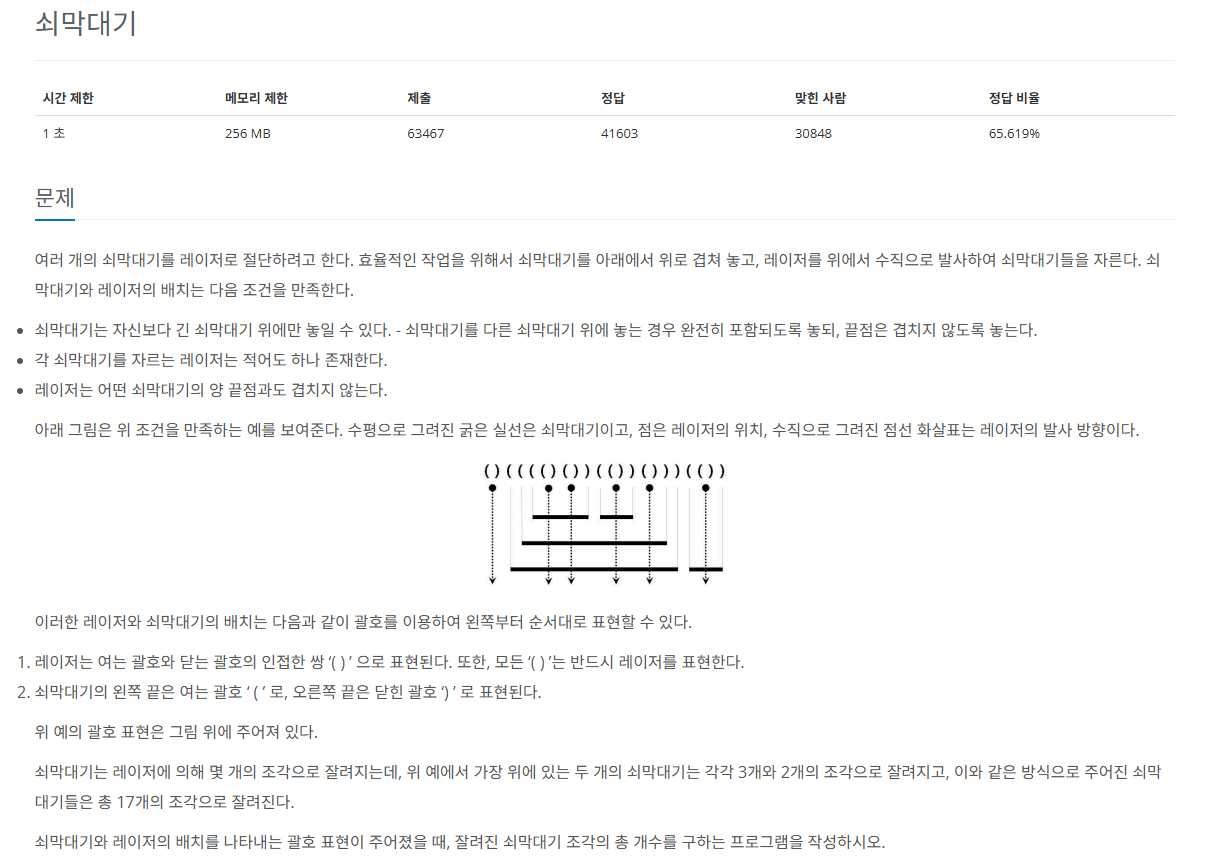
https://www.acmicpc.net/problem/10799
문제를 이해하고 잘려진 조각의 총 개수를 구해보자.
#include <iostream>
#include <string>
#include <stack>
using namespace std;

int main() {
    string bars;
    cin >> bars;

    stack<char> s;
    int bar = 0;
    int total = 0;

    for (int i = 0; i < bars.size(); i++) {
        if (bars[i] == '(') {
            if (!s.empty() && s.top() == '(') {
                bar++;
            }

            s.push('(');
        }
        else { // bars[i] == ')'
            if (!s.empty() && s.top() == '(') { // 레이저인 경우
                total += bar;
            }
            else if (!s.empty() && s.top() == ')') { // 쇠막대기가 끝나는 경우
                total++;
                bar--;
            }

            s.push(')');
        }
    }

    cout << total;

    return 0;
}
Leave a comment